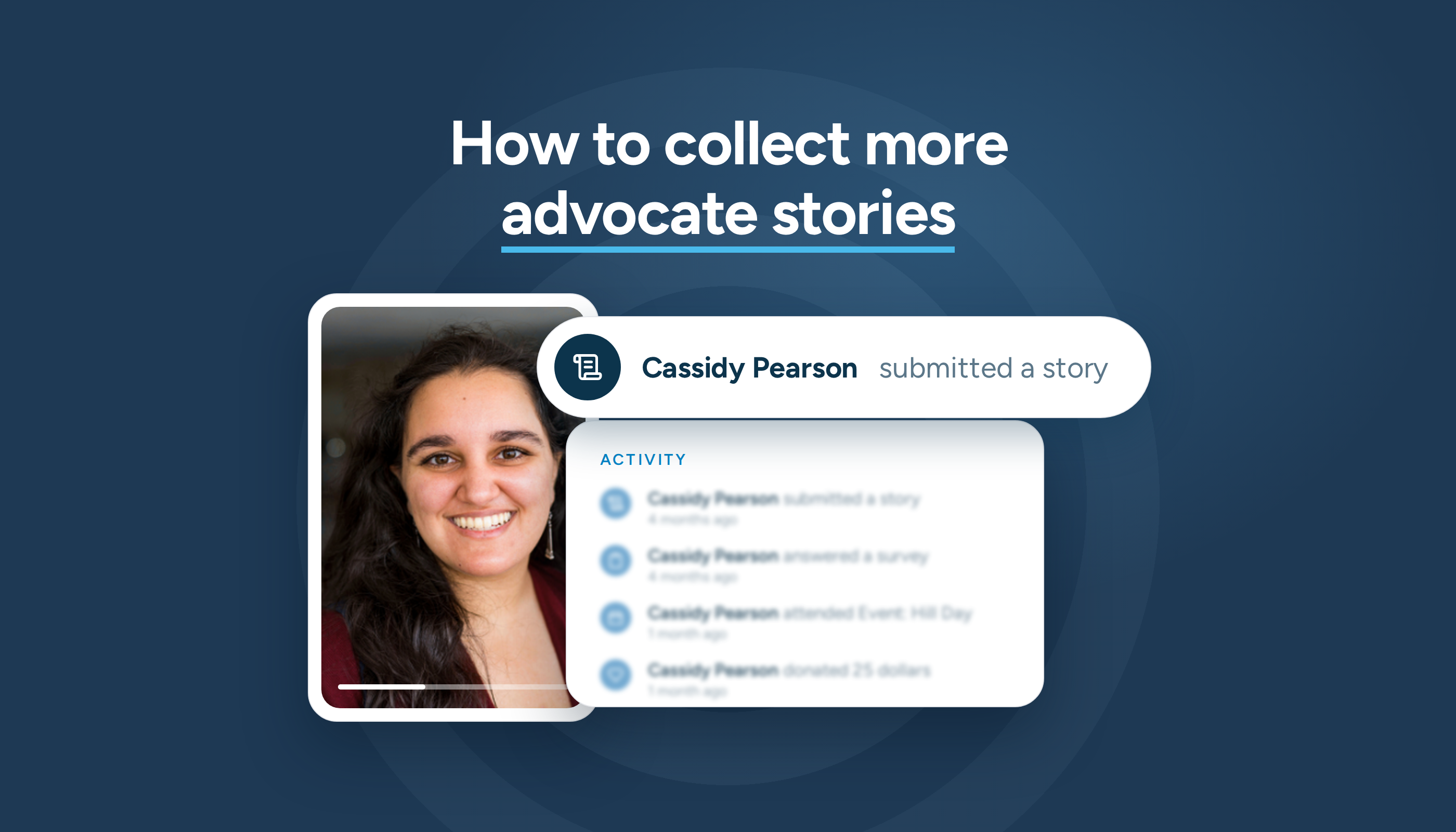
Why your "Share Your Story" form gets nothing back
Most organizations trying to collect advocate stories are doing some version of the same three things:
- Keeping a story bank page on the website that no one submits to.
- Running ads that say "Share Your Story."
- Making "Share Your Story" one of six asks in the member newsletter.
Each of these has a place in a program. The problem is what comes back: almost nothing, and what does is uneven. The ask is too large to make cold. It is like handing someone a $500 fundraising form without telling them what the money is for or why they are the perfect person to help the cause.
If your organization is serious about collecting stories, here is how to set up the ask.
Use the Foot-in-the-Door technique
In 1966, researchers asked homeowners to make a tiny commitment to safe driving—something easy enough that most people barely had a reason to say no. Then they came back with a wildly different ask: Would you let us put an enormous, ugly “Drive Safely” billboard in your front yard?
Among people approached cold, only 17% agreed. But among homeowners who had already said yes to the small request, 76% said yes.
That enormous jump is the foot-in-the-door effect: once people begin participating, continuing feels much easier than starting. And that is exactly why, when you want people to share meaningful stories, you usually shouldn’t begin by asking them for the whole story.
Tactic 1
Decide what the stories are for before you ask
Lawmaker meetings, written testimony, the member newsletter, social media, press. The use determines the format and the questions. An association collecting stories for a fly-in needs district and policy area on every submission. A c4 collecting for ads needs video and a signed release. If you do not know what you are collecting for, your submitters will not know either.... and they'll be less likely to share.
For ten ways to put collected stories to work, see our guide to using advocate stories across your program.
Tactic 2
Tactic 2
Have people apply to be featured
Instead of asking members, “Will you tell us your story?” flip the dynamic: invite them to apply to have their story featured. Build the application as a short survey and collect what you actually need - relationship to the issue, one sentence on what their story will be about, and how they'd like to be contacted.
Then send an automated reply from a named staffer: “Thanks for applying. We’ll review submissions and follow up by Friday.” You choose the strongest stories, and only those members receive the recording link.
Tactic 3
Tactic 3
Ask if they are willing before you ask them to share
This tactic is better for a cold or semi-cold audience, where an application asks too much.
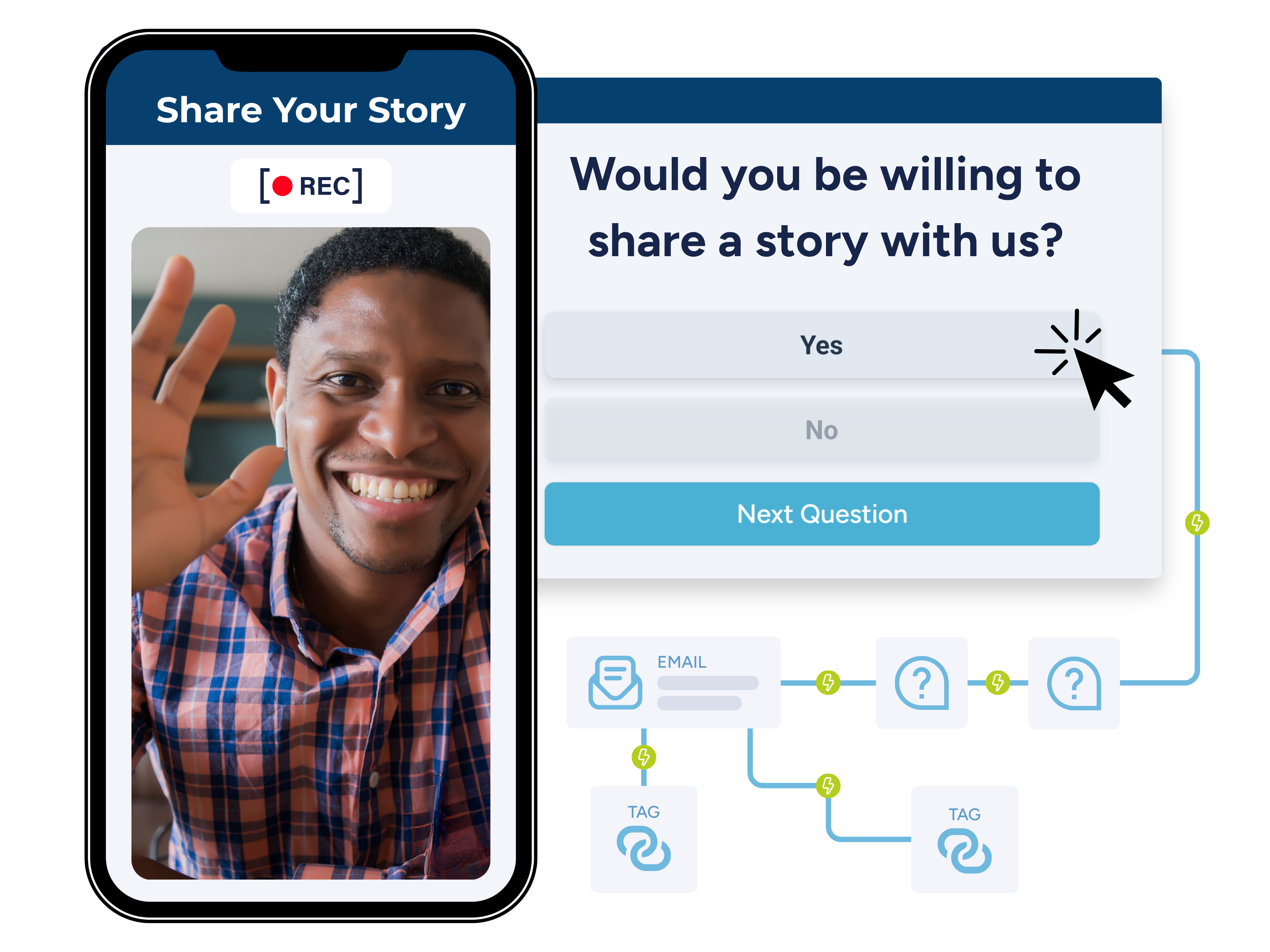
Run an ad or an SMS campaign that asks one question: would you be willing to share your story about X?
Send them to a short survey: who they are, what the story is about, a yes to using it in your advocacy, and the best way to reach them. The automated thank-you carries the instructions and the deadline.
Tactic 4
Tactic 4
Put a deadline on every ask
The application closes on a date. The recording link expires on a date. Without one, a willing person might want to contribute... but not get around to submitting. As we all do when there's no deadline.
A deadline also turns story collection into a campaign with a launch email, a reminder, and a close, instead of a form that sits on the website.
Tactic 5
Tactic 5
Send instructions, not a blank link
Once someone applies, agrees, or raises their hand to share a story, do not follow up with a recording link and leave them to figure out the rest. That creates a second moment of friction: now they have to decide what to say, how to start, how long to talk, and whether they are doing it “right.”
Instead, automate a follow-up email that gives them a simple structure to follow.
Tell them exactly how to begin, what kind of detail to include, how long to speak, and how to end. No need for them to reshare their name on camera. You already have that information on file!
"Hold your phone at eye level and start your video with: ‘I support [your policy area] because…’ Then give us one specific moment or detail, in your own words. Please keep your video under 60 seconds and speak slightly faster than you would in normal conversation."
Tactic 6
Give them an empty box
On your email-to-lawmaker action, stop handing advocates a prewritten message to edit. Give them an empty box and one prompt: why does this matter to you?
More people will fill it in than are willing to record a video. Every submission is a story that your organization can use across many mediums - as long as you have a proper disclaimer in place.
What advocates type in that box saves to their profile in the CRM and your story bank, where it is easily browsable alongside your other submissions.
Tactic 7
Collect written stories first, then go back for video testimonials
Open the first dedicated story ask as written only. A text box is a far lower bar than a camera, and people who would never record will write three paragraphs. Read what comes in, flag the ones with something real in them, and go back to those people for the video with the same instructions.
Tactic 8
Tactic 8
Pick up the phone for the ones you want most
For a small group (your top ten applicants, a chapter board, your grasstops list), call before you send the link.
Ask what they would say. You get a better video and a relationship your government affairs team can use later.
AdvocacyAI has written testimonial and video story forms built in. Supporters type their story or record from a phone or laptop, and every submission lands in two places: the advocate's profile in the CRM and your story bank. The application survey, the automated follow-up email, and the story itself all attach to the same record.
Start collecting stories that build influence
AUTHOR BIO
Pam Oliva is Director of Customer Experience at AdvocacyAI.


