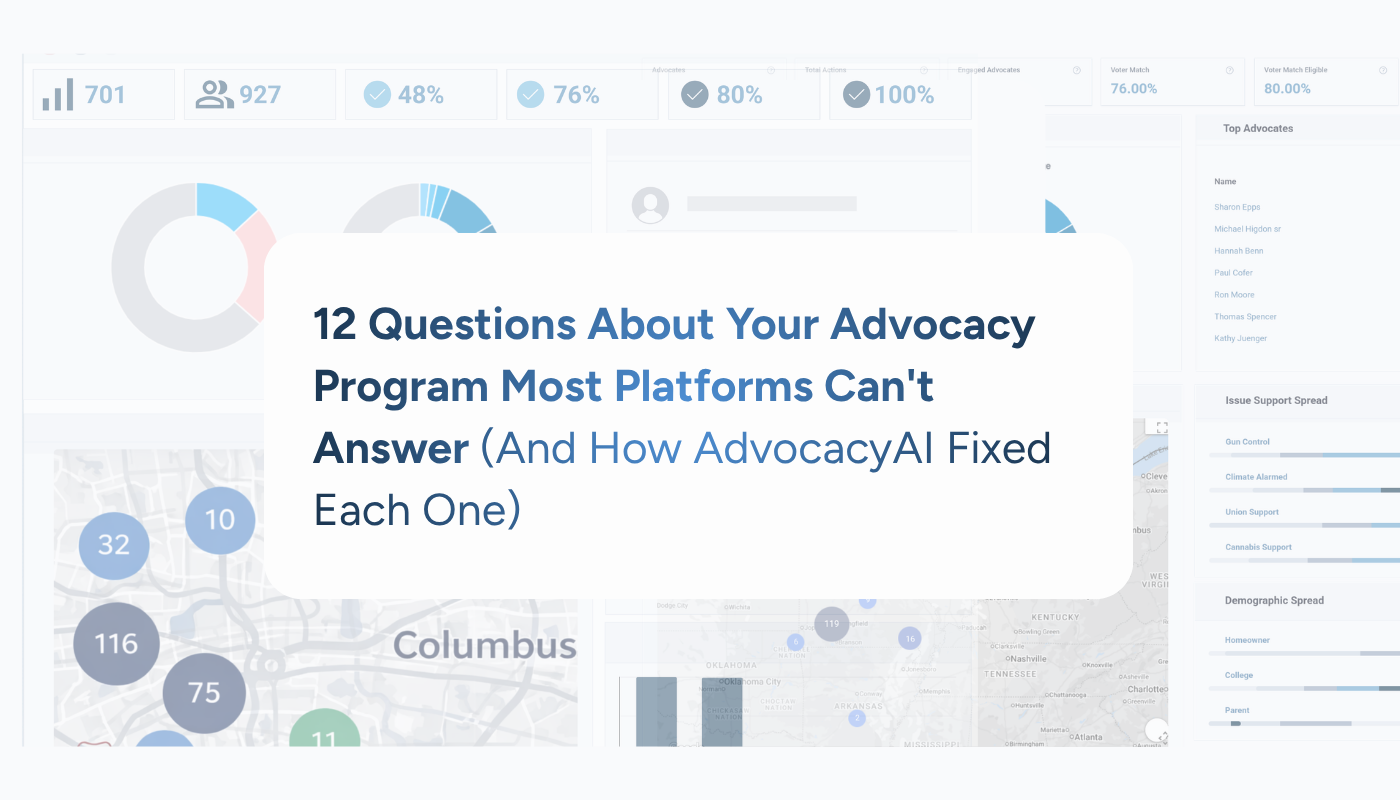
12 Questions About Your Advocacy Program Most Platforms Can't Answer (And How AdvocacyAI Fixed Each One)
Most platforms can't reach the advocacy data that matters, so at AdvocacyAI we built the solution. Here are 12 questions about your advocacy program that most platforms can't answer.
How to Run a Digital GOTV Program You Can Actually Measure
Most GOTV programs stop measuring at page views. Learn the two-ask framework (registration checks + voting plans) that produces verified turnout data, plus why a January voter file match-back is the step that actually proves your program worked.
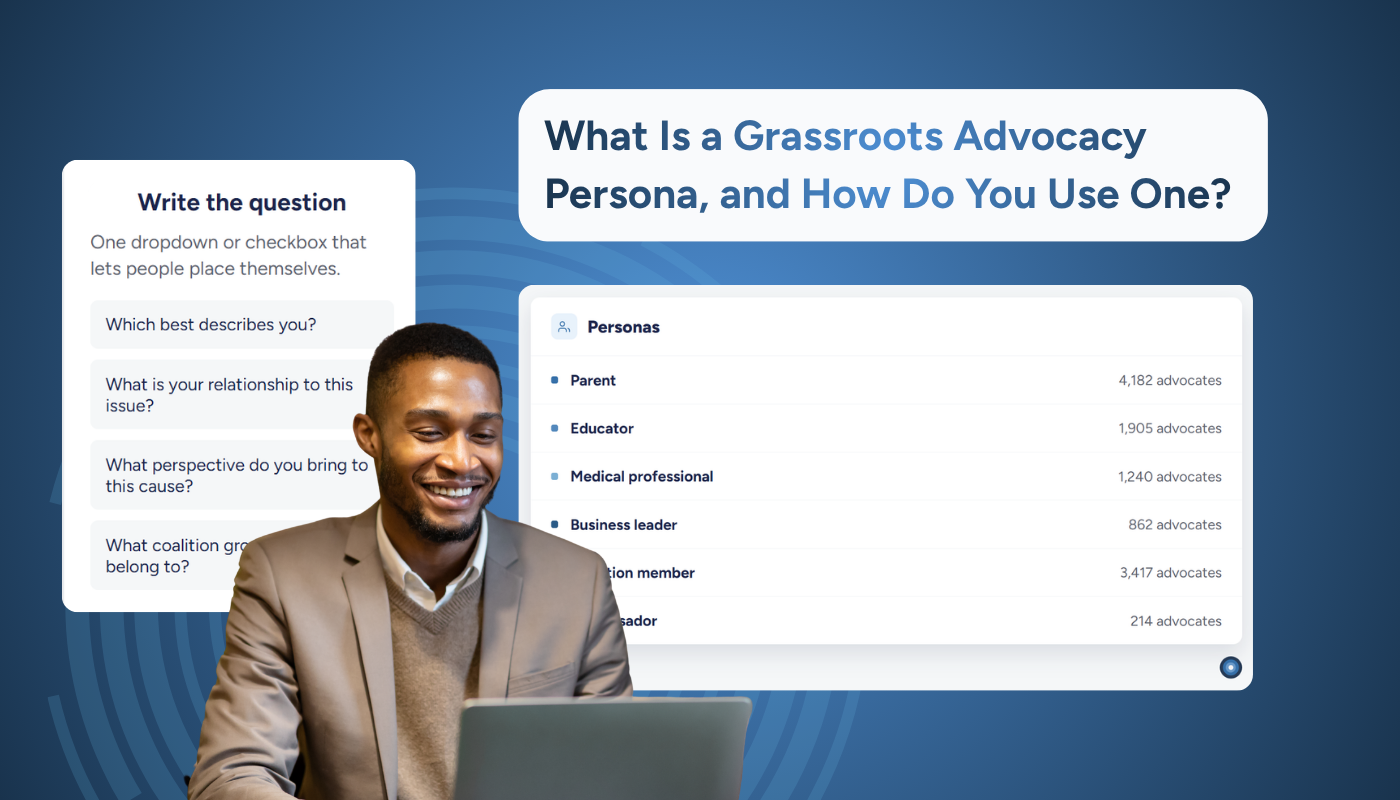
What Is a Grassroots Advocacy Persona, and How Do You Use One?
In advocacy, personas help you drive more engagement by reaching different groups with the messages, issues, and actions most relevant to them. And ensuring the way they communicate with lawmakers captures their unique perspective of an issue.
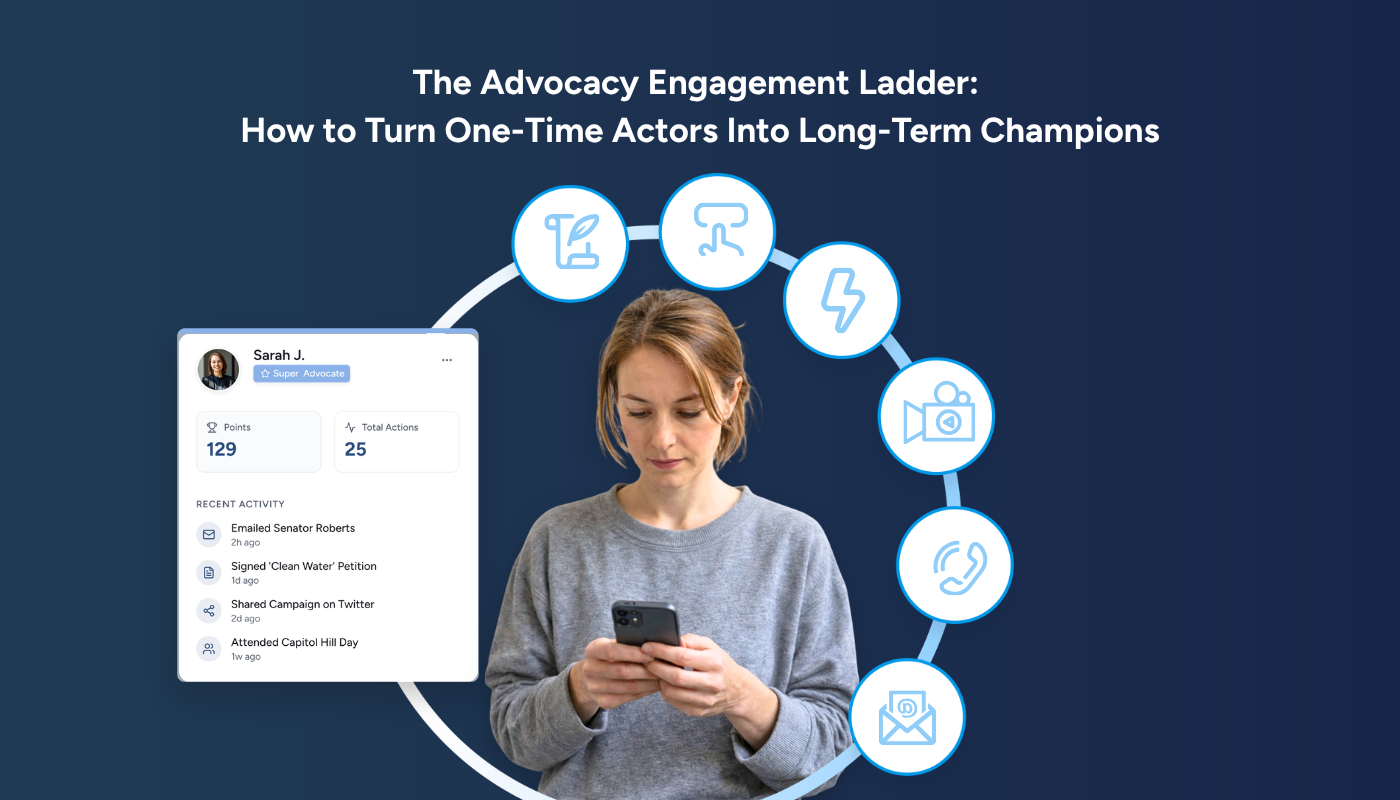
The Advocacy Engagement Ladder: How to Turn One-Time Actors Into Long-Term Champions
An engagement ladder is the structure your program runs on every day, the same way a CRM structures a sales team's pipeline — never a project you check off and close. Build the rungs, automate the triggers between them, and your list stops being a number that grows and becomes a roster of people moving somewhere specific.
What AI means for Grassroots Advocacy: Updated for 2026
In 2026, AI for grassroots advocacy has moved from hype to utility. Here are 5 practical shifts: the rise of the non-technical 'accidental techie' building micro-tools, finally-achievable personalization for teams of one, AI taking over boring backend data hygiene and fraud detection, optimizing for AI search (AIO), and a renewed focus on human relationships as AI handles the volume.
Why Most Advocacy Campaigns Feel Busy—but Don't Move Lawmakers
Advocacy organizations often confuse activity with impact. True legislative influence requires strategic alignment across departments, focused issue prioritization, disciplined message repetition, audience segmentation, and depth-based metrics rather than vanity metrics like list size.
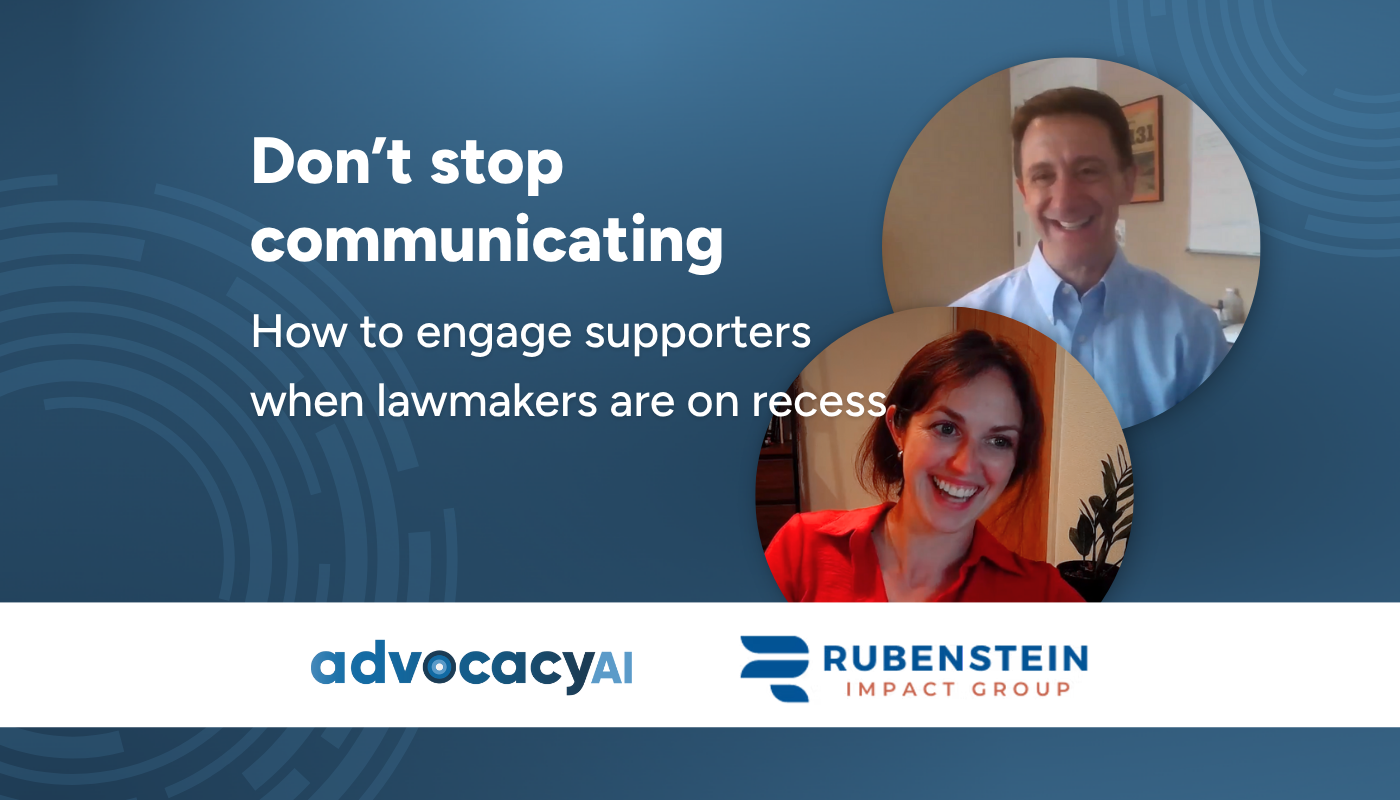
How to Engage Supporters when Lawmakers are on Recess
Recess is a prime window for advocacy engagement, not a break. Keep communicating with supporters year-round through in-district activities, story collection, surveys, briefings, and community events. Expert Brian Rubenstein shares tips on filling your funnel early, using simple surveys, and delaying autoresponders to keep your grassroots base active between campaigns.
AdvocacyAI Alternatives (2026): Compare Top Advocacy Software Tools
A 2026 comparison of the top AdvocacyAI alternatives, including VoterVoice, Quorum, Phone2Action, SoftEdge, NationBuilder, Speak4, and New/Mode. Learn how to choose an advocacy platform based on campaign types, advocate management, personalization, automation, AI, and reporting, with a side-by-side feature comparison table and FAQs.
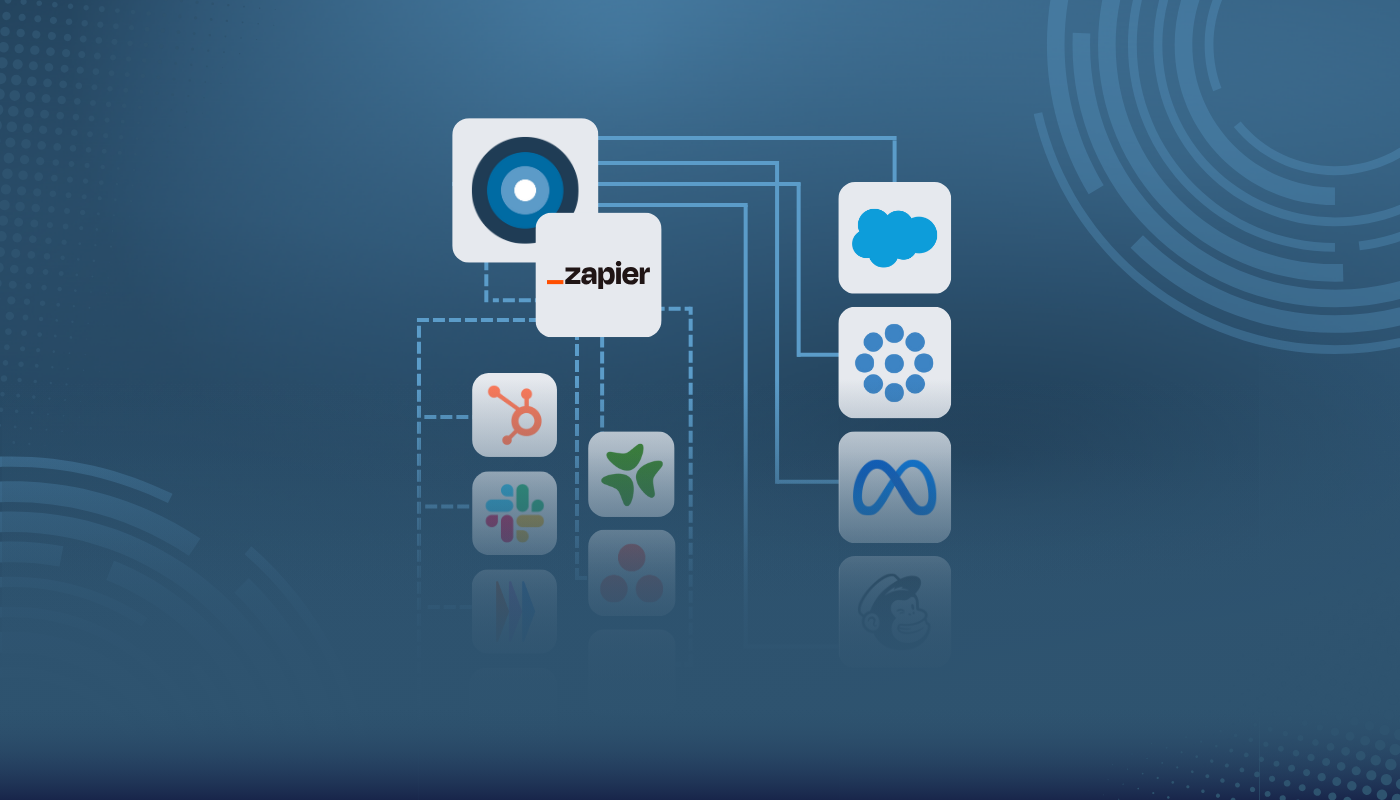
10 Zapier Use Cases (Including the most in-demand workflows of 2025!)
AdvocacyAI's Zapier integration lets advocacy and public affairs teams connect supporter actions to their wider tech stack with no code. Here are 10 ready-to-adapt workflows for 2025 - from turning action-takers into donors and auto-inviting committed advocates into community channels, to hyper-local rapid response, behavior-driven email personalization, story-to-fundraising loops, lapsed reactivation, volunteer scheduling, coalition expansion, and data hygiene guardrails.