Back to Insights
Why Your Advocacy Emails Are Outperforming Your Fundraising Emails (And What To Do About It)
Ada's TL;DR digest
Advocacy emails generate nearly 4x more engagement than fundraising emails from the same list. Here is why the gap exists and how connecting your nonprofit advocacy platform to your fundraising program closes it.
Advocacy emails generate nearly 4x more engagement than fundraising emails from the same list. Here is why the gap exists and how connecting your nonprofit advocacy platform to your fundraising program closes it.Your nonprofit advocacy program is working. People are opening emails, clicking links, sending letters to their lawmakers. Your list is engaged.
But when your fundraising team looks at their metrics, it feels like a completely different organization.
Advocacy lives in one platform. Fundraising lives in another. Reconciling the two has been, for most teams, a manual project that gets de-prioritized every time something more urgent comes up.
That is starting to change. Organizations that have connected their advocacy software to their fundraising program are seeing things in their data that were not visible before. The starting point, in almost every case, is understanding why their advocacy list behaves so differently from their fundraising list in the first place.
Why do advocacy emails get higher click-through rates than fundraising emails?
Advocacy action alerts are more specific, more timely, and easier to act on.
Part of it is the nature of the ask.
When someone gets an email from your nonprofit advocacy platform saying a vote is happening next week and their representative is on the fence, the action is concrete and the timing matters. There is something to do, and it takes two minutes.
Fundraising emails tend to be less specific about why right now matters, and the ask amount is usually a round number that has nothing to do with that particular person's giving history.
The 2026 M+R Benchmarks put numbers to what most people in this space have probably noticed. Advocacy email click-through rates came in at 2.3%. Fundraising email click-through rates came in at 0.59%. It is the same list, often the same sender, and a completely different level of engagement depending on what you are asking people to do.
The 2026 M+R Benchmarks put numbers to what most people in this space have probably noticed. Advocacy email click-through rates came in at 2.3%. Fundraising email click-through rates came in at 0.59%. It is the same list, often the same sender, and a completely different level of engagement depending on what you are asking people to do.
Your advocacy list is your most qualified fundraising audience
Your advocacy list is your most qualified fundraising audience
Advocacy software already knows who your best donor prospects are. Most organizations are not using that data.
Advocacy software already knows who your best donor prospects are. Most organizations are not using that data.
The same M+R report found that 0.34% of people who complete an advocacy action go on to donate on the post-action page. On a list of 50,000 action-takers, that's 170 donations happening with almost no additional prompting, before any segmentation, before any personalization, before anyone has looked at whether the ask amount on that page makes sense for that particular person.
Research from the University of Maryland analyzing over two million advocacy messages found that people who wrote personalized messages to their lawmakers converted to paid members at double the rate of the overall list of subscribers.The most engaged people on your nonprofit advocacy list are also among your most likely donors. They are already showing you who they are through how they engage.
Why don't most nonprofits connect their advocacy and fundraising data?
Why don't most nonprofits connect their advocacy and fundraising data?
Advocacy software and fundraising CRMs have always tracked different things. Until now, connecting them required work most teams could not prioritize.
Advocacy software and fundraising CRMs have always tracked different things. Until now, connecting them required work most teams could not prioritize.
Advocacy platforms track actions. Fundraising CRMs track giving. Getting those two systems to share information has historically required either a custom integration or a manual reconciliation process that most teams do not have the bandwidth to maintain.
So the advocacy team keeps running nonprofit advocacy campaigns without knowing which action-takers are also major donor prospects. The fundraising team keeps working a reactivation strategy on people who have been quietly engaging with the advocacy program for months. A major gifts officer spends time carefully cultivating a prospect who has been receiving high-volume action alerts from a completely separate part of the organization the entire time.
It is just what happens when the systems do not share information.
| What your advocacy platform knows | What your fundraising CRM knows |
|---|---|
| Email opens and clicks | Giving history and lapse dates |
| Action completions | Major gift flags |
| Engagement frequency | Donor tier and capacity |
| Who took action this week | Who hasn't given in 13 months |
What changes when your advocacy software connects to your fundraising program.
What changes when your advocacy software connects to your fundraising program.
Personalized fundraising asks increase revenue. Major donor prospects are protected from spamming and churn.
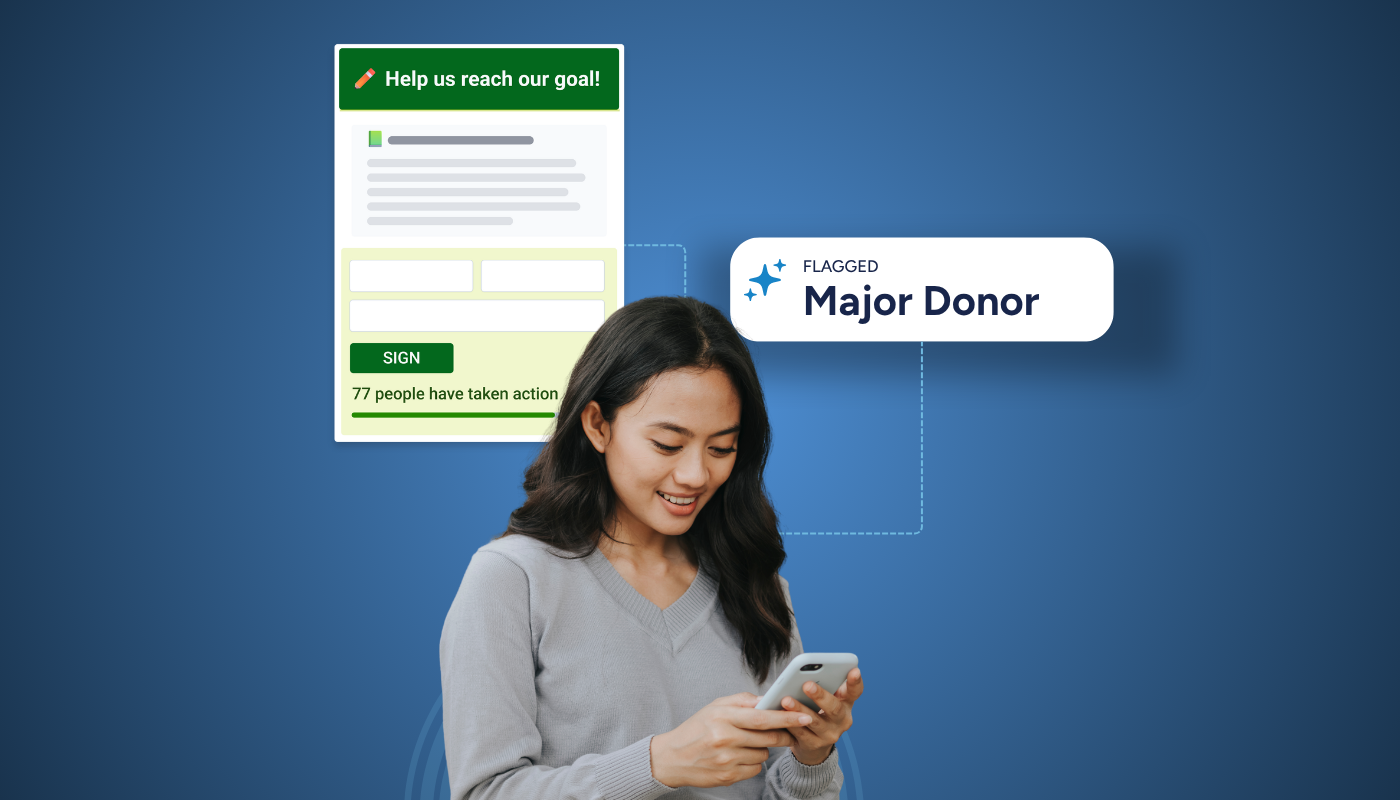
The math on this is fairly straightforward. If your advocacy platform knows that a supporter who just completed an action has given $2,500 before, the post-action donation page can reflect that. Not a generic $25 ask, but something anchored to what that person has actually done. The suggested amount travels with the supporter from the action completion to wherever you're sending them to donate — your ActBlue page, your Fundraise Up form, whatever you're already using — pre-filled, based on their actual giving history.
The suppression side matters just as much and gets talked about less. A major donor shouldn't be receiving the same six action alerts a month as someone who signed up last week. When your advocacy platform knows who your major donors are, it can protect those relationships rather than quietly eroding them. Your major gifts team spends months carefully cultivating someone while your advocacy program is sending them urgent subject lines twice a week.
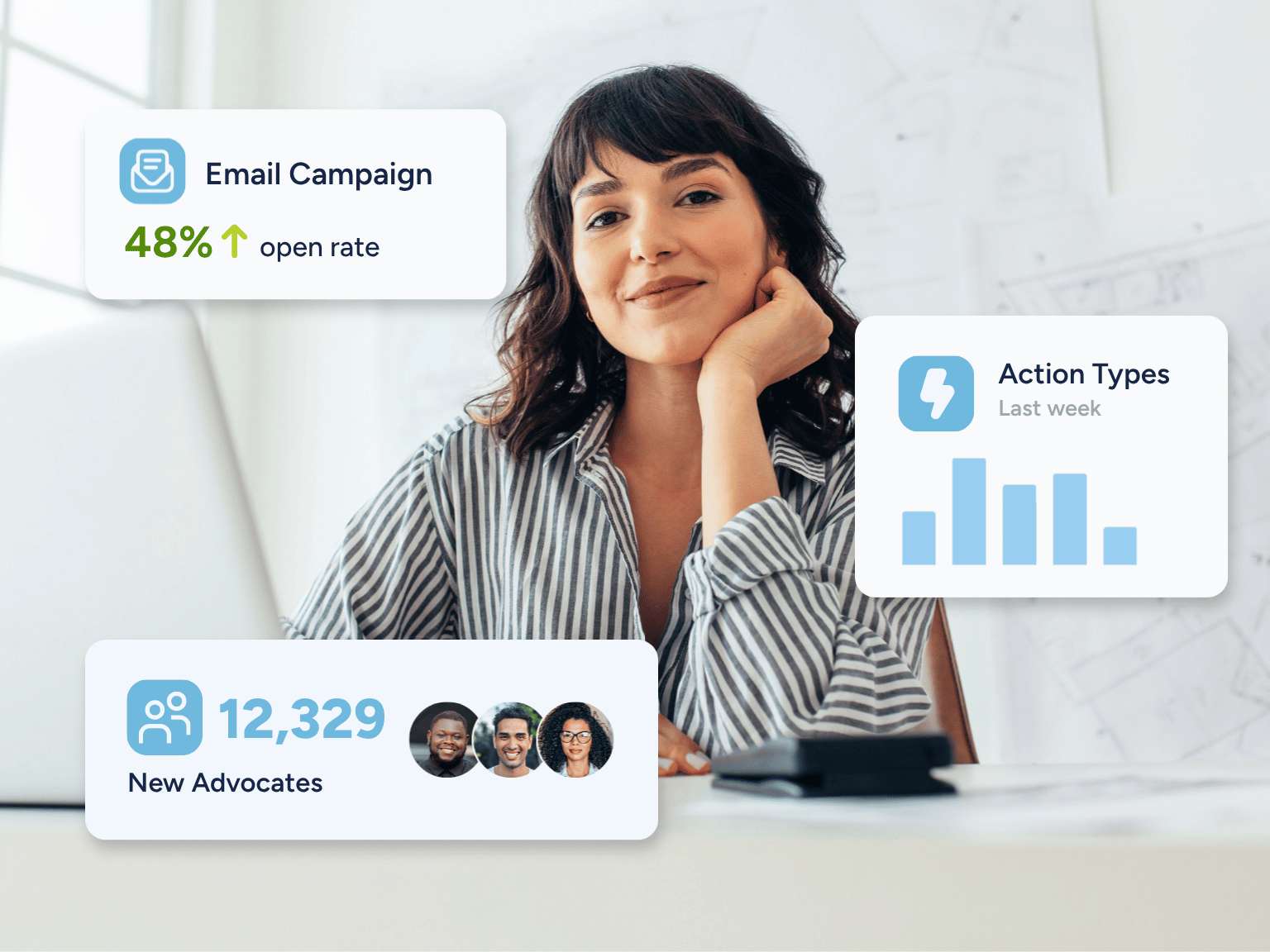
Personalized asks increase average gifts size by 62 percent year-over-year
How to integrate your nonprofit advocacy platform with your fundraising program.
How to integrate your nonprofit advocacy platform with your fundraising program.
Connect your advocacy software to your fundraising program without replacing any of the tools your team already uses.
Connect your advocacy software to your fundraising program without replacing any of the tools your team already uses.
The most common reason organizations have not connected their advocacy and fundraising programs is that the process has historically required technical resources most teams do not have.
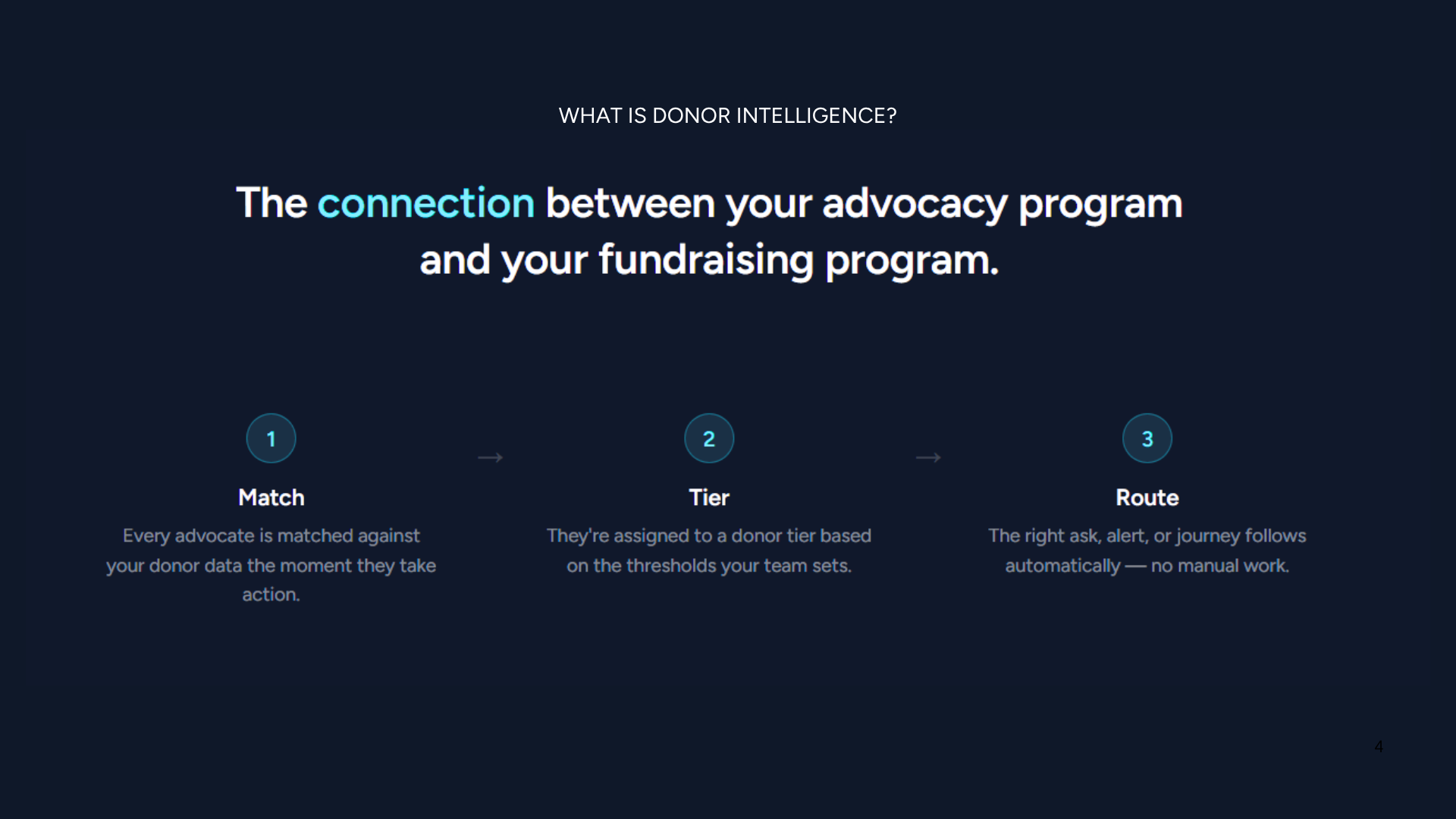
AdvocacyAI removes that barrier. Donor Intelligence is built directly into the advocacy platform, which means the connection between your advocacy actions and your fundraising program does not require a separate integration project.
Start with your existing donor data. Import your giving history from Salesforce, Engaging Networks, Dataro, Windfall, DataAxle, or any provider you already use.
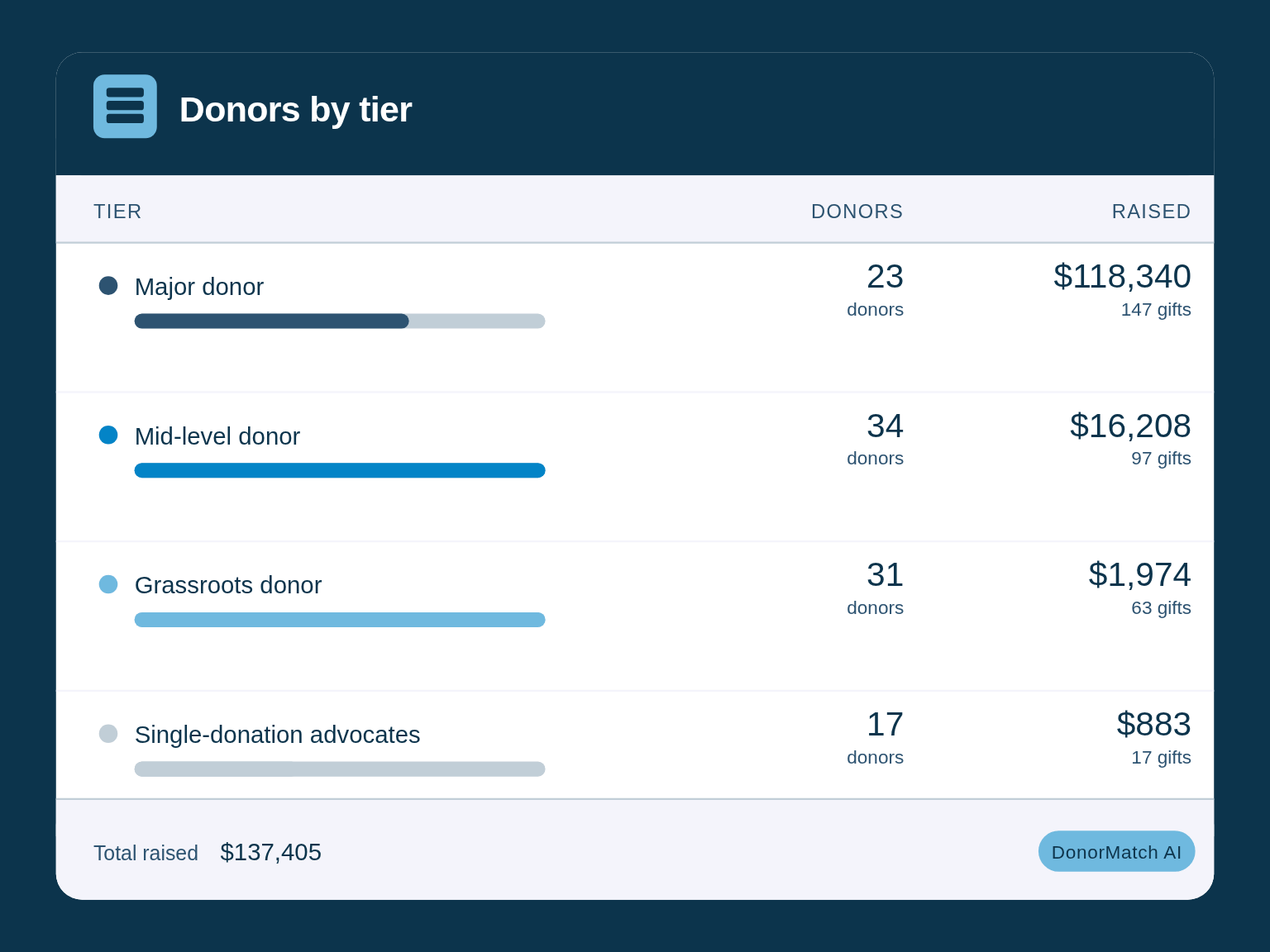
AdvocacyAI matches those records to your advocates the moment they take action on your nonprofit advocacy platform and assigns them to the donor tier you have configured. The personalized ask follows automatically.
If you do not have existing donor intelligence data, DonorMatch is the optional add-on that fills the gap. DonorMatch scores advocates for giving potential the moment they take action through your advocacy software, surfacing major donor prospects and assigning them to tiers — so you are not starting blind even on your first campaign.
Either way, your nonprofit advocacy program starts generating fundraising intelligence from day one.
See how AdvocacyAI Pro connects your nonprofit advocacy platform to your fundraising goals