This article is for teams that run grassroots advocacy or government relations with a list: association members, coalition supporters, or your company's employees.
Your advocates and stakeholders are paying close attention during elections season. Your communication team can help turn some of that energy into engagement for your advocacy efforts in the fall. Here are three things to send your advocates between now and then.
Your advocates and stakeholders are paying close attention during elections season. Your communication team can help turn some of that energy into engagement for your advocacy efforts in the fall. Here are three things to send your advocates between now and then.
Deliverability is getting harder every year, and getting clicks within your emails is more important than opens. Every content idea below is built to earn those clicks that keep your list engaged and your emails out of spam.
Three reasons to send this content:
1. Mailbox providers watch whether people click; a list that clicks in December gets delivered in January.
2. You learn who responds before you need them. Rapid response works when you already know who takes action and focus on them.
3. Your frequent action takers identify themselves, so your bigger asks (a constituent meeting, testimony, a contribution) go to the right people.
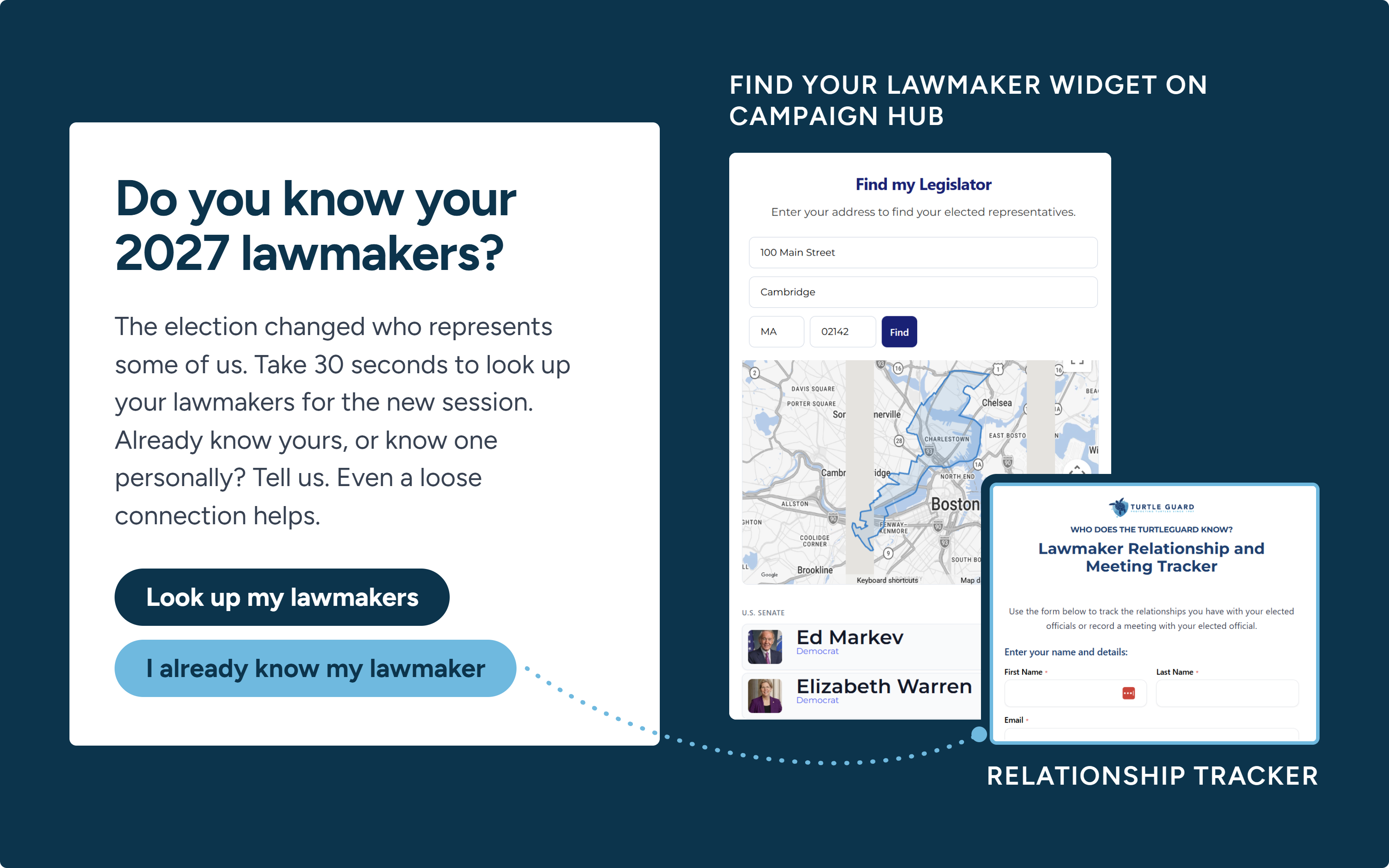
Do you know your new lawmakers?
One email, with two opportunities to click.
Link 1: See who represents you in Congress in 2027
Send them to a lawmaker lookup page. They enter their address and see who represents them in 2027. In AdvocacyAI, that page lives on your own campaign hub, so every lookup is tracked and feeds your email engagement data: you can see who checked.
Link 2: Already know your lawmaker? Let us know.
Send them to a relationship form with one question: do you personally know any of your lawmakers, their staff, or someone who does? Went to high school together, same church, your kids play on the same team, you donated once. It all counts. This is the grasstops map most organizations say they have, and very few can actually produce. Collect it now; in March you won't have time to go looking. Both paths land in your database as trackable engagement, the kind of visibility most advocacy teams can't get from their tools.
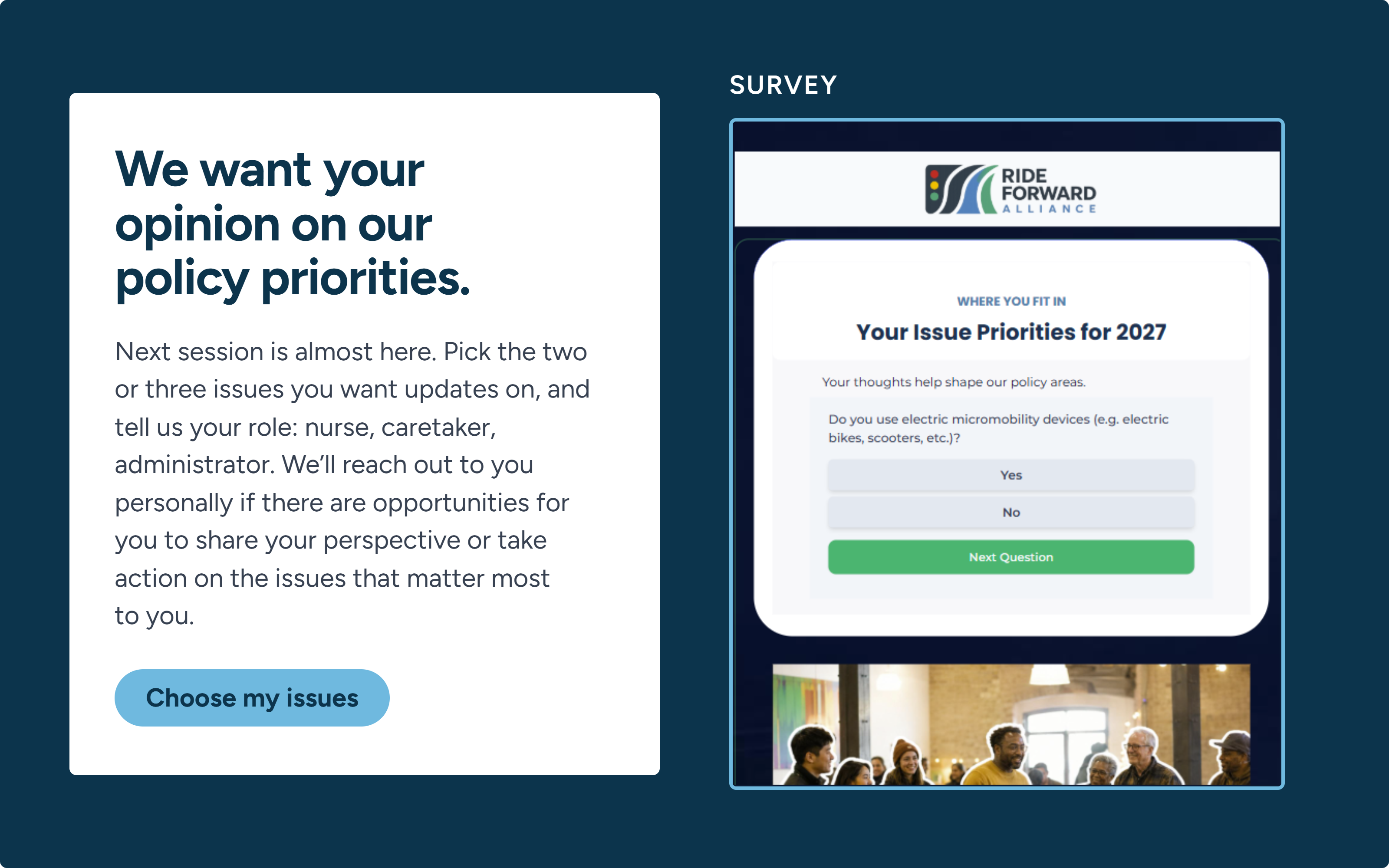
Issue preference survey
Ask members to pick the two or three issues they care most about, and their perspective on those issues: caretaker, nurse, hospital executive, patient. Save both as custom fields on the advocate record.The payoff starts the moment you send your first action alerts in January. Issue picks decide which alerts each member gets, so nobody receives email about bills they don't care about.
With advocacy, their perspective (we call it an advocacy persona) decides how their messages to lawmakers read: a nurse and an administrator describing the same bill in their own terms.
Read more about how advocacy personas work.
When you track issue preferences and perspectives, members get fewer, more relevant emails. You get much higher engagement and curated segments you can communicate with when you need them.
When you track issue preferences and perspectives, members get fewer, more relevant emails. You get much higher engagement and curated segments you can communicate with when you need them.
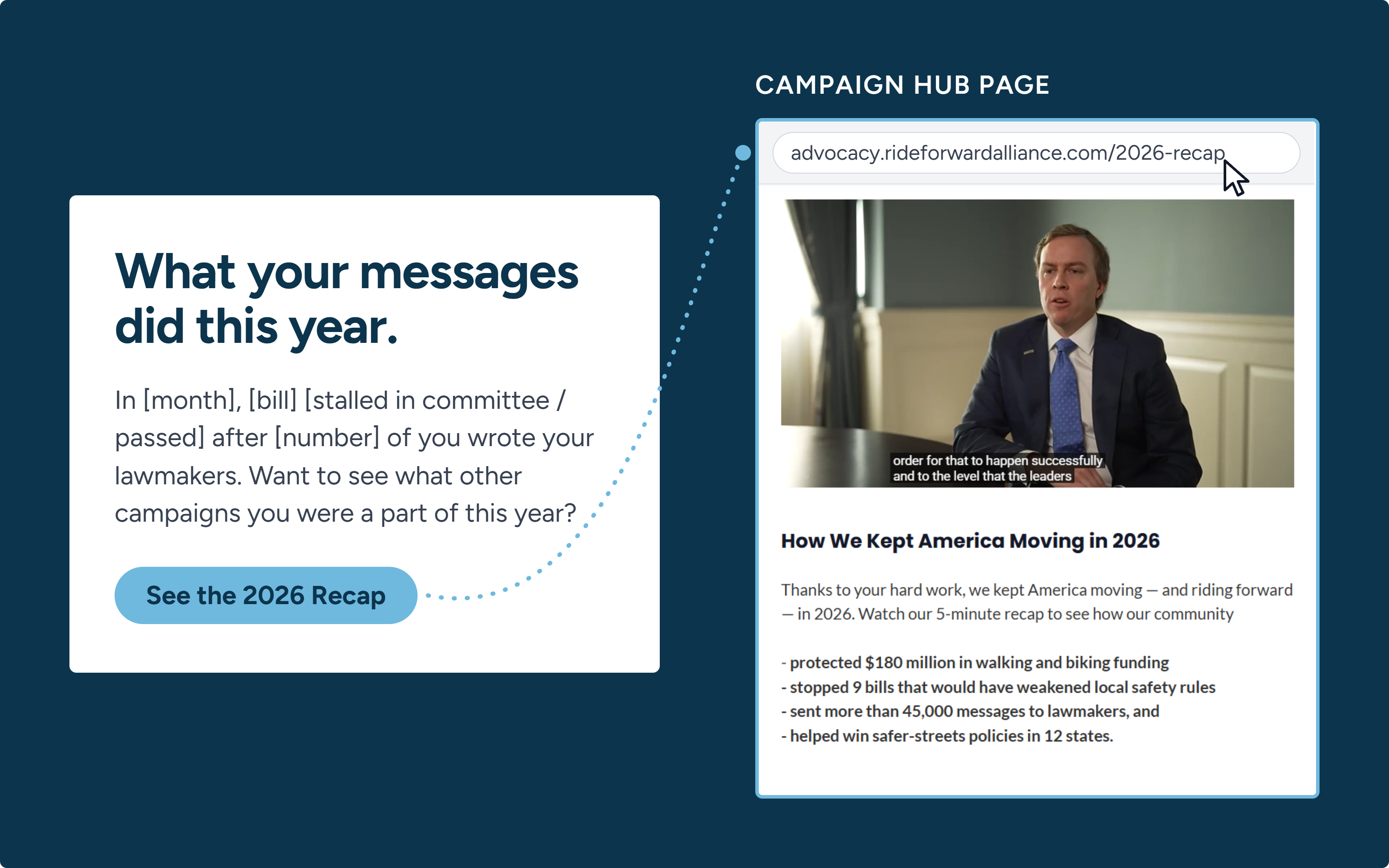
The 2026 recap
Send a short recap of one specific campaign: the bill, what happened, and how many members acted. Then link to a page that covers your whole year-in-review.Why not write your whole recap in one email? Because linking to the recap on your website gets supporters to click on it! Long emails with lots of images are more likely to go to spam. While "year-in-review" emails for grassroots advocacy are common, a shorter email with a click to your website is best practice for email health.
Run all three of these content pieces between Election Day and the new year, and January starts with a list that clicks, a grasstops map your government relations team can actually use, issue and perspective segments, and a tagged audience of proven action takers.
Your first grassroots advocacy campaign of the session goes out to people who have been clicking your emails for two months.
AdvocacyAI is an advocacy platform built for organizations that mobilize supporters to influence lawmakers.
We run everything mentioned in this article: lawmaker lookup pages on your own campaign hub, relationship and preference forms that save to the advocate record, and one-click tags that build your audiences.
AdvocacyAI won Best Advocacy Technology Platform at the 2024 Reed Awards and Best Innovation in Advocacy at both the 2024 and 2025 Reed Awards.