Ada's TL;DR digest
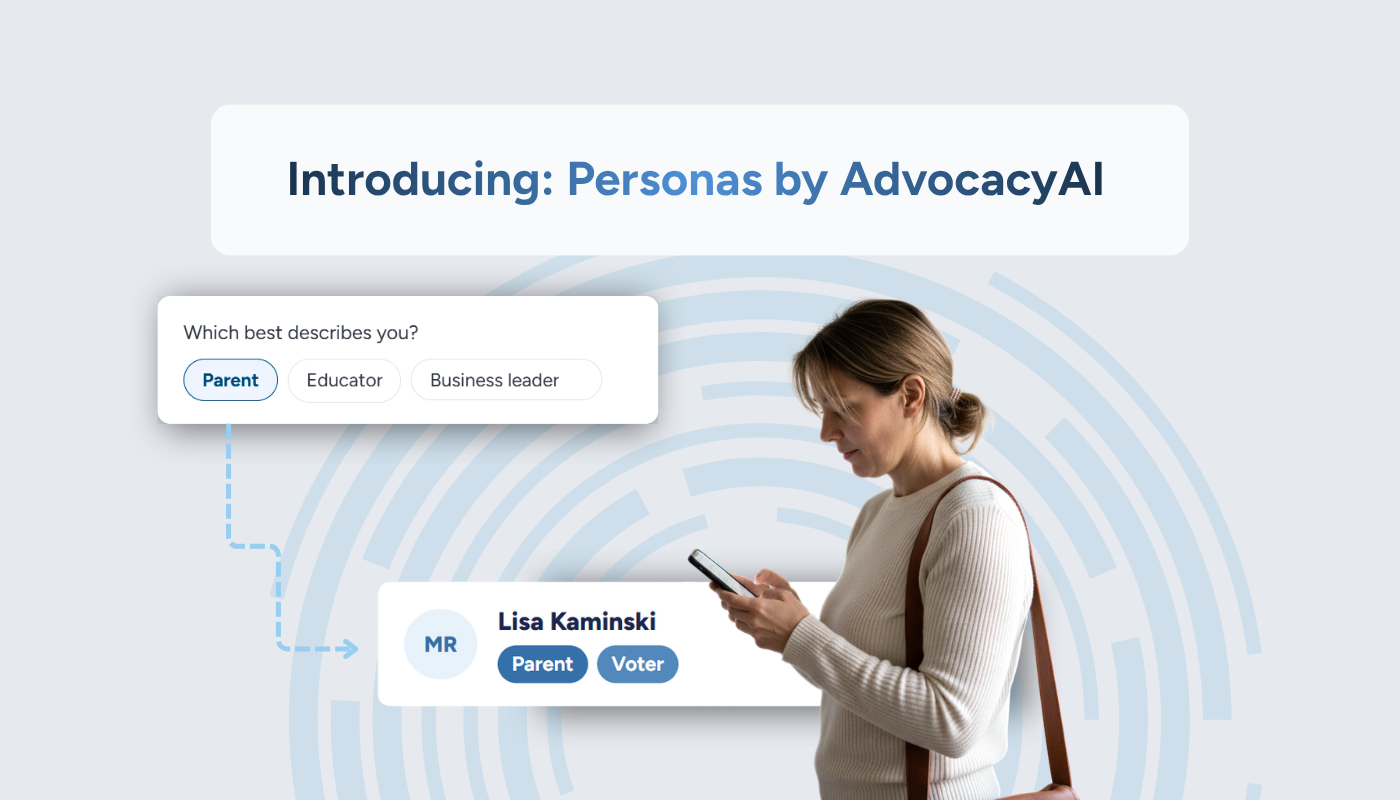
Personas let you group your advocates by how they identify themselves, then use those groups to drive landing pages, email journeys, CRM segments, and the message a supporter sends to their lawmaker. Supporters sort themselves by answering one question on an action page, or by arriving through a link built for their audience. One campaign can now speak to a parent, a business leader, and a clinician from their perspective - and make sure they're giving their unique perspective to lawmakers as well.
What is a persona?
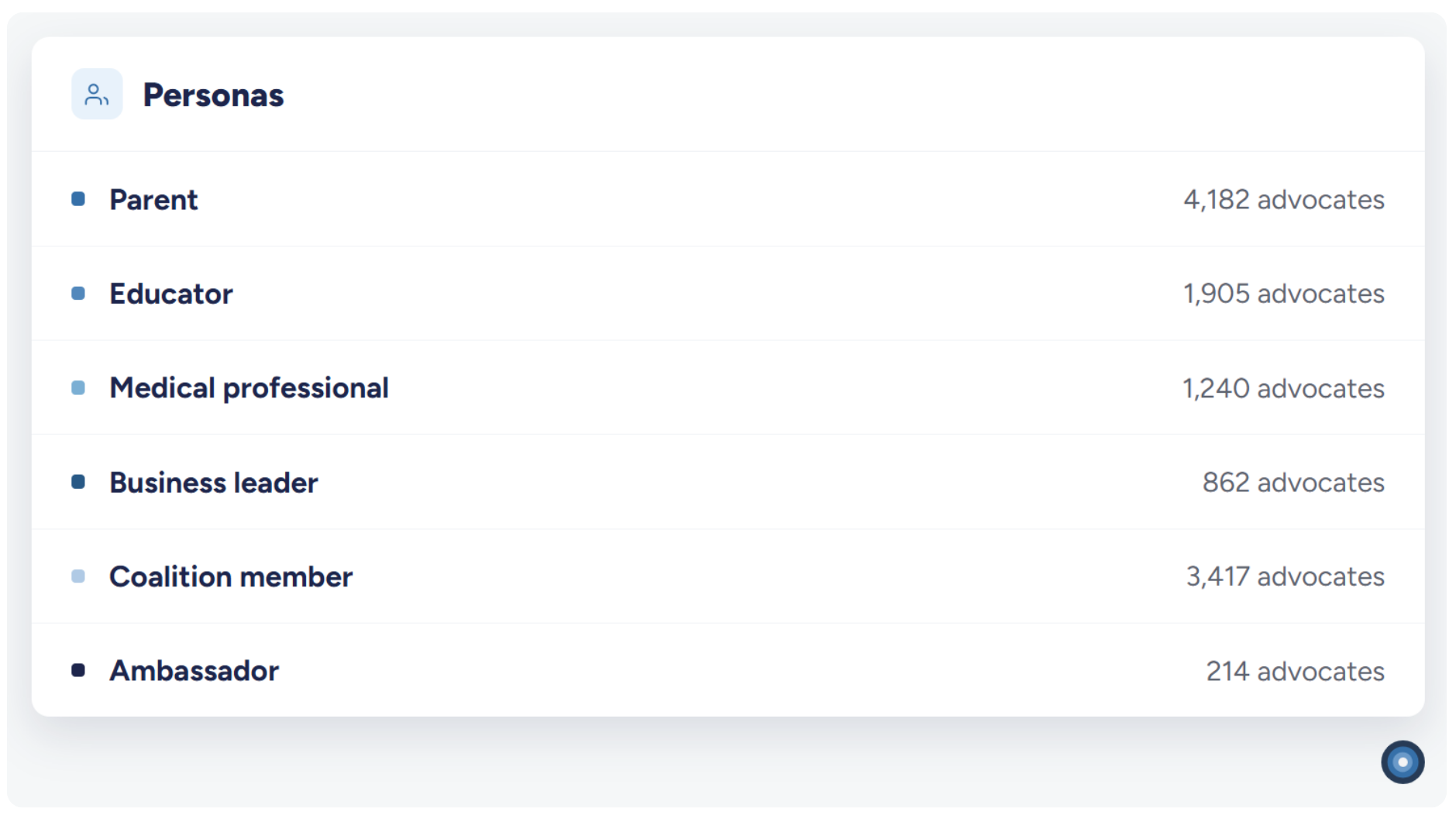
A persona is a group in your advocate list that you define. Parent. Educator. Medical professional. Business leader. Coalition member. Someone who lives near a project site.
Under the hood, this runs on custom fields, (which doesn't sound like a very exciting feature at all.) But what it does for your team, is give you more time to focus on what matters: your advocacy strategy. Deciding who your list is made out of and how those people can help you, lets you build real relationships and reach lawmakers better.
Read more about how advocacy orgs use personas here.
What can personas do for my program?
Influence lawmakers more effectively
Offices get messages from different angles of the same issue. A business leader fighting for their employees and a parent fighting for their children on the same issue, is much, much more persuasive than a generic email coming from everyone on your list. A staffer seeing constituent input from multiple personas sees a critical level of impact in their district. One campaign can now produce all of those perspectives.
Build more engagement with your list
Engagement grows when your asks match the relationship. Pick two or three ways to identify groups inside your list: coalition members, ambassadors, first-time signers. Your asks can then speak to where each person is. Someone who has testified twice should not get the same next step as someone who signed their first petition last week.
Find the right people you need
Personas give you a shortlist for specific asks. When you need someone to testify, share their story, or show up to a city council meeting, pull the people who already fit the persona and reach out to them directly. That is digital organizing in a sentence.
Easier campaign setup
Build one campaign that produces multiple versions of your content, each written for the people most likely to respond to it. Separate links per audience, separate copy, separate asks, one campaign underneath.
Save your team time
Personas handle the sorting and the sending. What is left for you is the part that decides whether a campaign works: what argument moves this office, coming from this kind of person. You approve all the content; the platform helps you draft one version per persona before they go live.
How it works
Creating a persona is as easy as creating a custom field. Once it exists, attach the question to an action page, a petition, a survey, or an urgent alert. Their answer puts them in the persona you associated with it, so your list sorts itself.
You can also identify personas without asking. Give each audience its own landing page link and everyone who comes through it joins that persona. A page for labor leaders and a page for corporate coalition members, both under one campaign, both about ten minutes to build.
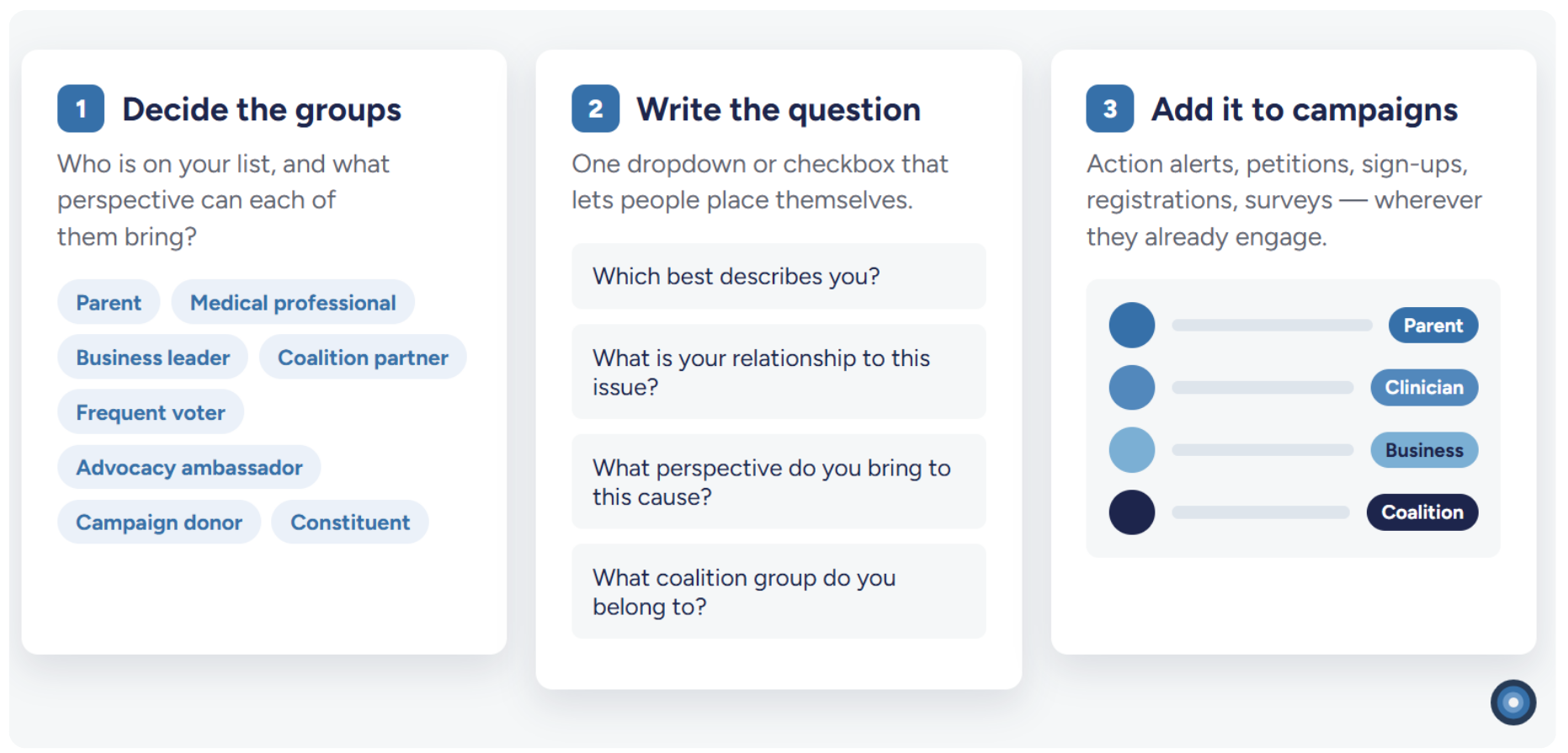
Either way, the answer saves to the advocate's record and stays there.
Frequently Asked Questions
Between two and ten is a workable range for most programs. Start with the groups you would treat differently if you could tell them apart. A persona with fifteen people in it is worth creating if those fifteen people are the ones you call when a committee needs a witness.
No. Personas run on custom fields, and the question that assigns them can live anywhere - like on an action alert, a petition, a newsletter sign-up, or an event registration. Supporters answer while they are already taking action or you can upload custom fields that already exist in your data.
A segment is usually a filter you apply after the fact. A persona is a group your supporters place themselves into at the moment they engage, which means it stays current and can drive content and automation without anyone maintaining it.
Yes. When a persona drives message content, one campaign can produce several arguments about the same bill, each written for the kind of person sending it. Legislative offices weigh a message from a local employer differently than a form email, and personas are how that distinction reaches the office.
Both!
Unlimited.
Yes. Personas are a standard feature in both AdvocacyAI Base and Pro accounts.
Build personas into your advocacy program
How would you sort your list if the people on it could segment themselves for you?