Back to Insights
What's New in Grassroots Advocacy: 3 Workflows Government Relations Teams Rethought in 2026
Ada's TL;DR digest
In March, our team asked a room of about 80 advocacy groups who had the capacity to do more than the basic form email, specifically who could treat lawmakers differently based on where they stand or what their organization's relationship with that office looks like. Only about 30 percent of the room raised a hand. Here are three workflows that government relations teams rethought with us in 2026 to close that gap.
This year is the 30th anniversary of the template form email to Congress. The workflow hasn't changed much since then: send someone to a landing page, they fill out a form, and a template email goes to their lawmaker's inbox.
For thirty years, grassroots advocacy has largely run as a separate effort from the lobbying and policy work government relations teams spend the rest of their time on. But when grassroots aligns with what your GR team already knows (which offices are champions, which are persuadable, what data would move a lawmaker in a given district), the program works harder and the two functions reinforce each other.
In March, our team asked a room of about 80 advocacy groups who had the capacity to do more than the basic form email, specifically who could treat lawmakers differently based on where they stand or what their organization's relationship with that office looks like. Only about 30 percent of the room raised a hand.
Here are three workflows that government relations teams rethought with us in 2026 to close that gap.
Workflow 1: Lawmaker Message Tracks for Government Relations Teams
What It Is.
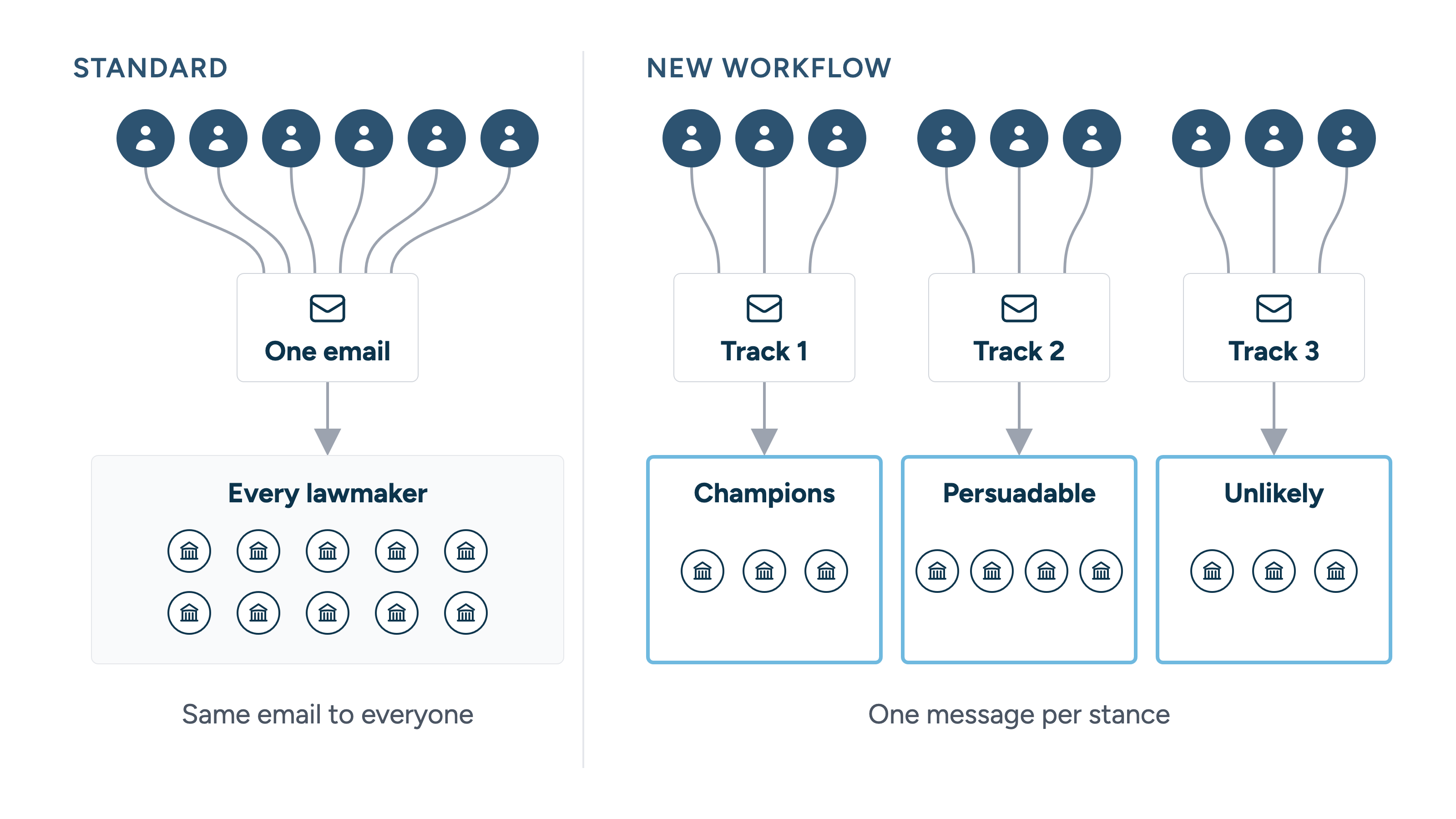
Message tracks are grassroots messages that stay true to what your team wants a lawmaker to hear, based on who that lawmaker is. Government relations teams already think this way. They know their champions, their persuadables, and the offices unlikely to move. What most grassroots programs have not done is align the email an advocate sends with what the GR director, policy director, or lobbyist would want that specific office to receive. Message tracks close that gap by running the right message to the right lawmaker automatically, based on where an advocate lives.
How It Works.
The person who builds your grassroots campaigns and the person who tracks legislators need to agree on which buckets matter for a given issue. Champions, persuadables, and unlikely is the out-of-the-box set. One organization ran just two: lawmakers near a proposed project and everyone else. That split helped offices see how central they were to the effort rather than receiving generic outreach. Once tracks are set, advocates are automatically shown the email that matches the track assigned to their lawmaker. In AdvocacyAI, enable Legislator Message Tracks in the targets section when building your campaign and assign each lawmaker to a track from there.
Why It Matters.
Office-level open rates, meaning staff opening those emails, rise noticeably when any personalization is in place. Two tracks is where most teams start.
Workflow 2: Hand-Signed Letter Campaigns for Grasstops and Lobbying Teams
What It Is.
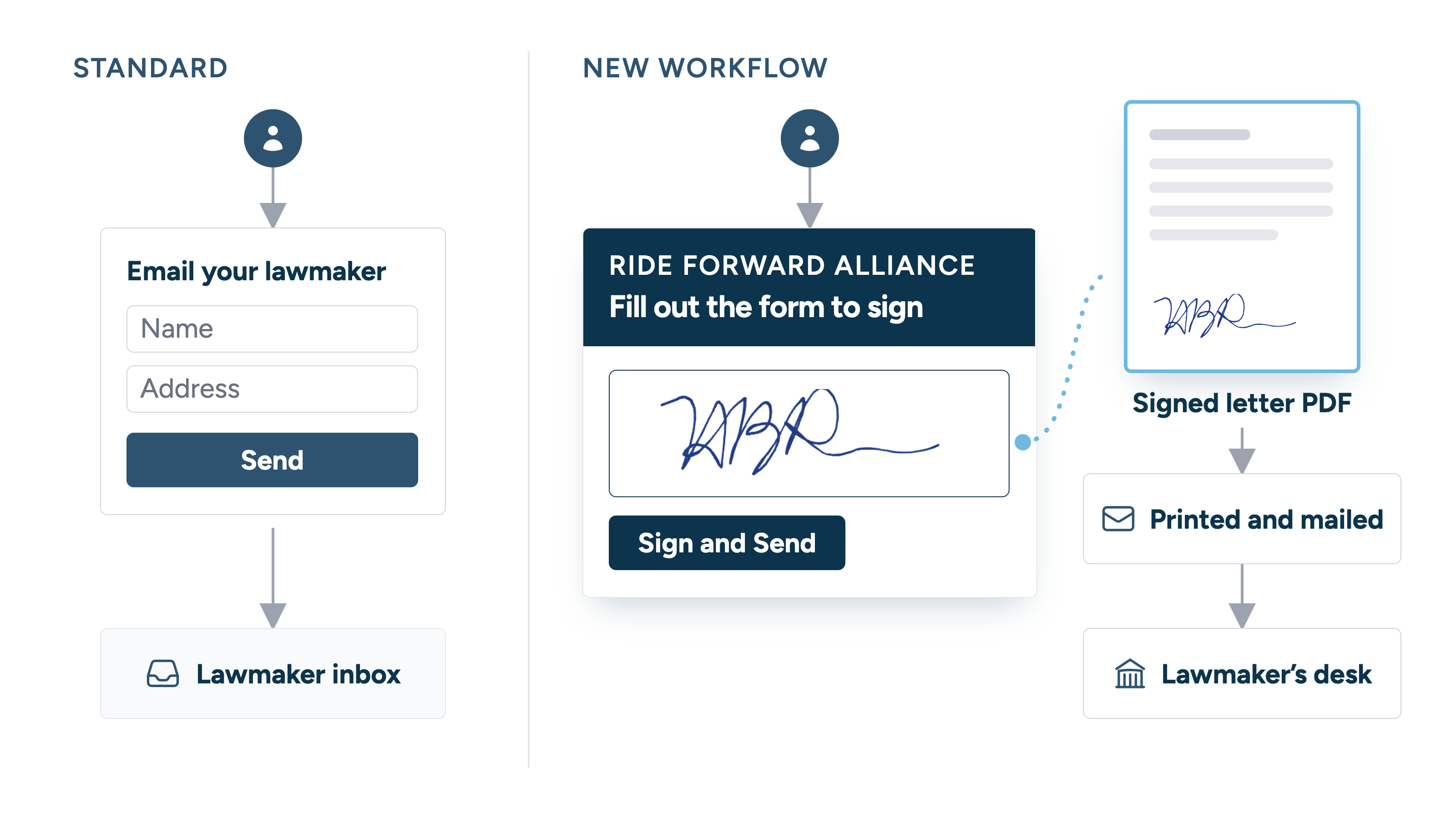
A physical letter, signed by a constituent, that arrives at the office. According to the Congressional Management Foundation, 88 percent of Congressional staff say individualized letters are more likely to influence a member's position than form messages. State house staff report the same. In an era of crowded inboxes, the physical letter gets noticed in a way that form emails do not.
How It Works.
The workflow is the same as an email campaign, except the final step is "sign and send" instead of send. The advocate can edit the letter first. The organization gets a PDF it owns, to print and carry into an office or mail in bulk. AdvocacyAI can handle the printing and mailing directly, sending each signed letter to the right lawmaker. When building a letter campaign, select whether your organization will manage the letters or have AdvocacyAI handle delivery. See how letter campaigns work
Why It Matters.
This tactic works at every scale. One organization ran a 35,000-letter campaign built from an email list and ads. Another changed an outcome with 50. A city council printed every letter it received and stacked them on the desk at the front of the meeting. The trust that comes with a physical piece of paper, signed by a constituent, can't be beat.
Workflow 3: District-Level Personalization for Grassroots Emails
What It Is.
The grassroots emails most likely to make it into a memo for the member carry information the lawmaker would not otherwise have about their district. Personal stories matter and offices respond to them, but the memo is built on facts: how many people in a district are affected, how many facilities are located there, where a state ranks on a given measure. Your organization already holds that data. District-level personalization is the workflow that delivers it to the right office automatically, so each advocate's email speaks directly to their lawmaker's district rather than a national average.
Interested in implementing any of these workflows? Request a demo.
Watch the Webinar Recording
Enter your email to watch our webinar on What's New in Grassroots Advocacy: 3 Workflows Government Relations Teams Rethought in 2026
No spam. Your email is used for access only.